
How to Build a Factory in Saudi Arabia: A Practical Guide for Developers
How to build a factory in Saudi Arabia: a practical guide for developers
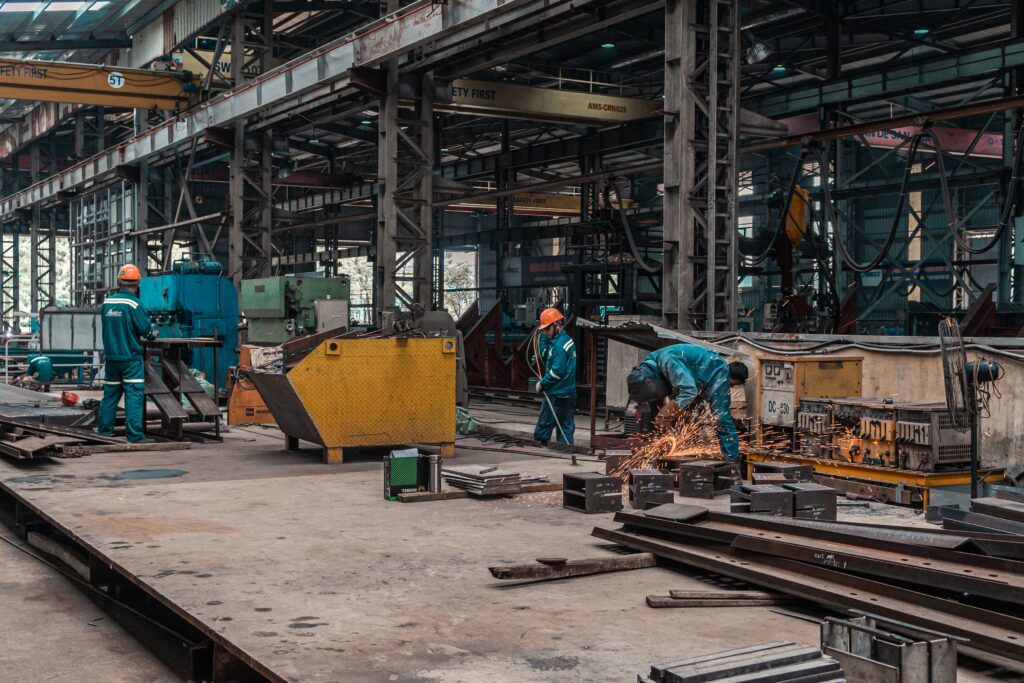
If you are planning factory construction in Saudi Arabia right now, you are doing it at the right moment. The Kingdom has a target of reaching 36,000 industrial facilities by 2035, up from around 8,800 today. Land is subsidized in government industrial cities. Utility infrastructure is already in place across dozens of zones. And the Ministry of Industry is actively streamlining licensing to bring new factories online faster.
So the opportunity is real. But here is what most developers find out six months into a project: industrial construction in Saudi Arabia is different from commercial construction in ways that are not obvious until something goes wrong.
The regulatory process is different. The contract structure is different. The approval bodies are different. And the contractors who know how to navigate all of it are not the same firms who built your last office building or warehouse.
This guide covers the full process from land selection through to factory handover. It is written for developers and factory owners who want a clear picture of what they are getting into before they commit to a site, a design, or a contractor.
What makes industrial construction different in Saudi Arabia
Most construction projects follow a fairly predictable path. But factory construction in Saudi Arabia operates under a completely different set of rules. You hire an architect, get drawings approved, hire a builder, and move in. Industrial construction does not work like that, and the differences matter a lot in Saudi Arabia specifically.
First, industrial facilities are built for a production process, not just for occupancy. What happens inside the building determines almost everything about how it has to be built. A food processing plant needs specific drainage gradients, hygienic wall finishes, and air handling systems. A chemical facility needs explosion-proof electrical fittings and secondary containment. A precision manufacturing facility needs temperature-controlled environments and vibration-free floor slabs. Your contractor needs to understand your production requirements before the first drawing is made, not after.
Second, every industrial construction project in Saudi Arabia goes through MODON, the Saudi Industrial Property Authority. MODON manages the industrial cities where most factory projects are built, and it controls the licensing pathway that turns a completed building into a legally operational factory. Getting MODON approvals wrong adds months to your timeline. Getting them right, with a contractor who knows the process, can take months off it.
Third, the standard contract model for industrial projects is EPC (Engineering, Procurement and Construction). If you have not worked with an EPC contractor before, the next section explains why it matters and what to look for.
Understanding EPC contracts for factory construction
EPC stands for Engineering, Procurement and Construction. Under an EPC contract, one firm takes responsibility for the complete project. They design it, source all the materials and equipment, and build it. You deal with one contract and one point of accountability throughout.
The alternative to integrated factory construction in Saudi Arabia is managing separate contracts for each phase: a design firm for the drawings, a procurement team for materials, a general contractor for construction. This works on straightforward projects. On industrial projects in Saudi Arabia, it creates problems.
Coordination between separate firms adds time. When something goes wrong (and on any industrial project, something always does), separate contracts mean disputes about who is responsible. And in a market where MODON licensing runs in parallel with design and construction, you need a contractor who can manage all three phases simultaneously, not hand off from one team to the next.
Why the EPC model outperforms fragmented contracts
A well-structured EPC contract gives you a fixed price, a fixed timeline, and a single firm carrying the risk if either slips. That structure is worth paying attention to when you are evaluating contractors, because a firm offering a competitive EPC price with a weak track record on delivery is a more expensive option than it looks on paper.
The factory construction Saudi Arabia process - step by step
Here is how a factory project moves from initial idea to operational facility. Each stage has its own timeline, its own risks, and its own decisions that affect everything that comes after.
Stage 1: Site selection and industrial zone assessment
MODON manages more than 35 industrial cities across Saudi Arabia, and choosing the right one is the first critical decision in any factory construction project in Saudi Arabia. Each one has different land availability, infrastructure quality, logistics access, and sector focus. Riyadh’s industrial cities handle a wide range of manufacturing. Jubail and Yanbu are focused on petrochemicals and heavy industry. Jeddah’s zones have strong logistics links to Red Sea ports.
Choosing the wrong zone affects more than your commute. It changes your utility connections, workforce availability, and logistics costs. In some cases it also affects your licensing eligibility. An experienced EPC contractor will assess these factors before you commit to a site, not after you have signed a land lease.
The selection process also involves confirming that your planned production activity is permitted in your chosen zone under MODON’s industrial activity classifications. This sounds administrative, but getting it wrong early can mean reapplying for a different zone weeks or months into a project.
Stage 2: Pre-construction planning and feasibility
Once a zone is selected, pre-construction planning defines exactly what you are building and what it will realistically cost. This stage produces a feasibility report covering the facility size, utility requirements, structural approach, and preliminary cost estimate.
Good feasibility work also maps out the full regulatory pathway for your project type. How many approval bodies will be involved? What documentation does each one require? What are the realistic timelines for each approval stage? Knowing this before design starts lets your contractor run approvals in parallel with engineering rather than waiting for completed drawings before approaching the regulators.
This parallel processing of design and licensing is one of the biggest timeline advantages an experienced EPC contractor provides over a fragmented project team.
Stage 3: Engineering design
Engineering design for an industrial facility covers more than a building layout. It includes the structural system, civil works, MEP systems (mechanical, electrical and plumbing), fire safety systems, process utility connections, and any specialized technical requirements tied to your production process.
In Saudi Arabia, industrial building designs must comply with the Saudi Building Code and with sector-specific standards. Food facilities follow SFDA guidelines. Chemical plants follow SAES standards where applicable. Pharmaceutical clean rooms follow GMP requirements. A contractor who does not know these standards will produce drawings that go back for revision. That revision cycle typically adds two to three months to projects managed by firms without Saudi regulatory experience.
Design packages for MODON submission have specific formatting and documentation requirements. Your contractor should know these requirements and build them into the design process from the start.
Stage 4: Industrial licensing and MODON approvals
This is where most developers lose the most time, and where the difference between contractors becomes most visible.
Getting an industrial license in Saudi Arabia now involves compliance with 17 separate regulatory frameworks. The list includes MODON, the Ministry of Industry and Mineral Resources, Saudi Civil Defense, the Ministry of Municipal and Rural Affairs, the Saudi Food and Drug Authority for food and pharmaceutical projects, and others depending on your facility type.
Each body has its own submission requirements, review timelines, and inspection processes. A contractor who has done this before knows the current requirements. They know the right contacts at each authority. They also know how to structure submissions to avoid revision requests.
According to MODON’s 2025 Industrial Cities Report, developers using pre-qualified contractors achieve licensing around four months faster. That is four months of production revenue you keep instead of lose. Four months of production revenue is a concrete number you can calculate for your specific project.
Stage 5: Procurement
Procurement covers sourcing, purchasing, quality verification and delivery of all materials, structural components and equipment. On an EPC contract, your contractor handles this. On a fragmented contract, you either manage it yourself or delegate it to a procurement firm who has no accountability for the construction timeline.
The practical value of EPC procurement becomes clear when supply chain issues arise. An established contractor has alternative suppliers pre-qualified and relationships in place to shift orders when lead times on a specific material extend. A developer managing procurement independently typically does not have these relationships and finds out about supply problems when a delivery does not arrive.
Stage 6: Construction and site execution
The construction phase covers civil works, structural steel erection, concrete work, MEP installation, cladding, internal fit-out and specialist finishing. In Saudi Arabia, active construction sites are subject to inspection by Civil Defense and MODON representatives at specific milestones, and documentation of these inspections is required for the final licensing sign-off.
Timeline discipline during construction directly affects your production start date. A contractor with strong project management systems, daily reporting, and milestone accountability will protect your commissioning date. A contractor who manages timelines loosely will cost you far more in lost production revenue than the difference in their original quote.
Stage 7: Commissioning and handover
Commissioning tests every system in the facility before handover: utilities, electrical, fire suppression, HVAC, process connections and any specialist equipment tied to your production line. A proper commissioning process finds problems while your contractor is still on site and responsible for fixing them.
Final handover in Saudi Arabia requires a documentation package confirming the facility meets all approved design specifications and has passed all regulatory inspections. Your contractor prepares and manages this package. Once it is accepted, you receive your operational license and production can begin.
How to choose the right factory construction contractor in Saudi Arabia
There are a lot of construction firms operating in Saudi Arabia right now. Most of them are chasing Vision 2030 project volume. Not many of them have genuine industrial EPC experience in the Kingdom, and the difference matters more than most developers expect before they have experienced a project go wrong.
Here is what to look for when you are evaluating contractors.
Verifiable industrial project history in Saudi Arabia
Ask any contractor you are considering to show you completed industrial projects, not commercial or residential work. Ask for the project type, the facility size, the client name, the timeline committed versus delivered, and a contact reference you can actually call.
A contractor who has built factories in Saudi Arabia has already worked through MODON’s current approval process. They know what the regulators want and how to present it. A contractor entering Saudi industrial work for the first time will learn all of this on your project.
Direct MODON and regulatory experience
Ask prospective contractors to explain their MODON approval process. Specifically: which contacts do they have at the relevant ministries, what does their standard licensing submission package look like, and what is their average timeline from design completion to license receipt on comparable projects?
A contractor with real regulatory experience will answer these questions in detail. A contractor without it will speak in generalities. The difference between the two is typically four to five months on your project timeline, and in a market where production revenue starts from the day your factory is licensed, that is a financial gap worth calculating before you make a selection decision.
A clear and honest cost structure
The lowest quote is rarely the best option on an industrial project. A contractor who wins on price and then manages variations loosely will cost more than a contractor who quotes accurately and delivers on it.
Ask how the contractor handles cost variations, what their track record looks like on budget adherence across comparable projects, and what their contract structure says about who carries the risk when costs change. These questions tell you more about a contractor’s reliability than their initial price does.
What does factory construction cost in Saudi Arabia?
Cost varies considerably based on facility type, location, size and technical specification. A light industrial unit in a serviced MODON city with existing utility infrastructure costs less per square meter than a purpose-built pharmaceutical facility with clean room requirements, specialist ventilation and GMP-compliant finishes.
Rather than quoting figures that may not apply to your project, here is the more useful way to think about cost.
The headline construction figure is one number. The cost of delay is another, and it is often larger. Every month a completed factory sits unlicensed, or every month a project runs over its planned timeline, represents lost production revenue. On a facility with SAR 5 million in monthly production output, a four-month licensing delay costs SAR 20 million in foregone revenue. The construction cost difference between a contractor with MODON expertise and one without it is rarely that large.
So when you are comparing quotes, factor in what each contractor’s regulatory track record implies about your commissioning date. The number that changes most dramatically between contractors is not usually the construction cost. It is the timeline.
The right EPC contractor will give you a detailed cost breakdown at feasibility stage and will stand behind that estimate through the project. Ask specifically how they handle cost variations and what their contract terms say about budget overruns.
Saudi Arabia's industrial construction market in 2026
Saudi Arabia is in the middle of a scale of industrial development that has no recent precedent in the region. The National Industrial Development and Logistics Program (NIDLP) targets 36,000 industrial establishments by 2035. To put that in context: the Kingdom had around 8,800 industrial facilities at the start of this program. That is a 309% increase in under 15 years.
This is creating a surge in demand for industrial construction that is visible across every MODON industrial city in the country. New industrial zones are being built. Existing zones are being expanded. Priority sectors including pharmaceuticals, food processing, advanced manufacturing and renewable energy equipment are receiving additional incentives to accelerate facility development.
For developers, this means the opportunity is large and the window for early positioning is open. The majority of new factory projects planned for 2026 to 2030 are in their site selection and pre-construction stages right now. Firms that move quickly, work with experienced EPC partners, and navigate the regulatory process efficiently will commission their facilities while competitors are still in the approval queue.
For reference on MODON’s industrial city locations, available zones and licensing procedures, the official MODON website at modon.gov.sa has current information on land availability and application processes. The Ministry of Investment (invest.gov.sa) also provides sector-specific incentive information for foreign developers considering Saudi industrial projects.
Frequently asked questions about factory construction in Saudi Arabia
How long does it take to build a factory in Saudi Arabia?
Timeline depends on facility type and complexity. A standard light industrial facility in an established MODON city typically takes 10 to 14 months from design start to handover. A larger or more technically complex manufacturing facility runs 16 to 24 months. The biggest variable in either case is the licensing timeline. Developers working with EPC contractors who have established MODON relationships consistently achieve licensing faster than those managing the process independently.
What is MODON and do I need to work with them?
MODON is the Saudi Industrial Property Authority. It manages Saudi Arabia’s industrial cities and controls the licensing process for new industrial facilities. If you are building in a MODON industrial city (which covers the majority of industrial construction projects in the Kingdom), MODON approvals are a mandatory part of your licensing pathway. Your EPC contractor should have direct experience with MODON’s current submission requirements and review timelines.
Can a foreign company build a factory in Saudi Arabia?
Yes. Saudi Arabia currently allows 100% foreign ownership in most industrial and manufacturing sectors. The specific rules depend on your sector and company structure. The Ministry of Investment (MISA) at misa.gov.sa provides current information on foreign ownership rules for specific activity types.
What is the difference between EPC and a standard construction contract?
A standard construction contract covers the physical building work only. An EPC contract adds engineering (design) and procurement (materials and equipment sourcing) under the same contract. For industrial projects, the EPC model is generally preferred because it puts a single firm in charge of all three phases, which reduces coordination gaps, tightens the timeline, and creates clearer accountability for cost and schedule performance.
Which industrial zones in Saudi Arabia are available for new factory projects?
MODON operates industrial cities in Riyadh, Jeddah, Dammam, Yanbu, Jubail, Hail, Qassim and other locations across the Kingdom. Each zone has different land availability, infrastructure quality and sector focus. The right zone for your project depends on your production type, logistics requirements and workforce location. A pre-construction feasibility assessment from your EPC contractor should include a zone recommendation based on these factors.
What regulatory approvals does a factory project in Saudi Arabia require?
Industrial licensing in Saudi Arabia now involves 17 regulatory frameworks. The core approvals involve MODON, the Ministry of Industry and Mineral Resources, Saudi Civil Defense and the Ministry of Municipal and Rural Affairs. Additional bodies are involved depending on your sector (for example, SFDA for food and pharmaceutical facilities). Your EPC contractor should be able to map out the full approval pathway and realistic timelines for your specific project type before design begins.
Start your factory project with Temujin Prime Concepts
Temujin Prime Concepts is a Saudi-based industrial construction firm working across the Kingdom on EPC factory builds, manufacturing facility projects, and industrial plant construction. Our team has direct MODON regulatory experience and a track record of on-time delivery on industrial projects aligned with Vision 2030.
If you are at the planning stage, we offer an initial consultation to review your project requirements, discuss realistic timelines and costs for your facility type, and map out the licensing pathway specific to your production activity and chosen industrial zone.